
Alloy Ingot Casting Machine
Automated alloy ingot casting machine for aluminum, zinc, lead, copper and alloy ingots. Lanyu customizes mold length, pouring method, cooling and production line integration.
Table of Contents
Main Applications
The ingot casting machine forms aluminum, zinc, lead, copper and alloy ingots on a straight production line. Variable-frequency speed control helps coordinate pouring, cooling and demolding while reducing manual handling. The machine has a maximum width of 1.5 meters and is available in 18, 20, 22, 24 and 26 meter lengths for different capacities and plant layouts.
Overseas Project Support
For export projects, Lanyu can configure the alloy ingot casting machine around local fuel or power conditions, plant layout, automation level, operator workflow and environmental requirements. For overseas casting lines, Lanyu can match the machine to ingot dimensions, pouring accuracy, cooling method and downstream stacking requirements.
For a faster technical proposal and quotation, please share:
- Metal type, ingot weight, ingot dimensions and alloy grades
- Required output per hour, mold count and line length
- Pouring method, distributor requirements and molten metal supply layout
- Cooling method, demolding method and downstream palletizing or marking needs
- Destination voltage, frequency and local guarding or safety requirements
Working Principle
Ingot Casting Machine Workflow
Molten Aluminum Treatment
- Molten aluminum, zinc, or lead flows out of the melting furnace.
- The liquid undergoes efficient filtration through a waterway trough filter box to ensure impurities are effectively removed.
Distribution and Pouring
- After filtration, the molten aluminum enters a distributor synchronized with the casting machine.
- The distributor is equipped with 8 or more uniformly distributed outlets, precisely aligned with the running ingot mold cavities.
- During pouring, molten aluminum flow is synchronized with the casting-machine speed so each mold cavity fills to the specified depth (approximately 90%).
Intelligent Control System
- Variable-frequency speed control adjusts machine speed to the molten-metal flow and mold travel rate.
- The system ensures product uniformity and consistency through real-time monitoring and adjustments.
Rapid Cooling and Mold Removal
- After pouring, the mold enters a cold water immersion zone. The bottom is cooled rapidly via a circulating water cooling system.
- Once cooled, the aluminum ingot undergoes treatment with a mold removal air hammer to ensure successful demolding and safe operation.
Mold Maintenance
- Pre-use Preparation: Cold molds are preheated using heaters to prevent safety accidents and mold damage caused by temperature differences.
- Post-use Maintenance: The mold is cleaned and coated with a specialized release agent to extend its lifespan and reduce maintenance costs.
Advantages
- High-Efficiency Filtration and Distribution System: Supports clean, uniform molten aluminum distribution.
- Intelligent Variable Frequency Speed Regulation Technology: Enhances production efficiency and product quality stability.
- Rapid Cooling System: Reduces production cycles while ensuring mold safety.
- Comprehensive Mold Maintenance Measures: Extends mold lifespan and lowers operational costs.
Equipment Selection
Cooling Methods
Base Water Cooling
- Suitable for production environments requiring uniform cooling, ensuring stable bottom temperatures of the product.
Top Spraying
- Designed for scenarios with high cooling requirements at the top, providing efficient localized temperature reduction.
Bottom Spraying
- Ideal for applications needing enhanced bottom cooling, optimizing overall cooling efficiency.
Length Specifications
- 18 meters: Suitable for small to medium-scale production, offering flexibility to meet diverse output demands.
- 20 meters: Balances production efficiency with equipment length, suitable for moderate operations.
- 22 meters: Provides additional cooling and conveying length for higher production rates.
- 24 meters: Supports larger continuous production lines while balancing output and floor space.
- 26 meters: Provides the longest standard configuration for higher-capacity lines.
Equipment Features
Operational Performance
- Stable operation ensures consistent product quality.
- Energy-efficient design reduces operational costs and minimizes environmental impact.
Mold Quality
- High-quality molds ensure precise ingot formation and surface finish.
- Durable materials extend mold lifespan, reducing maintenance frequency.
Product Advantages
Ingot Appearance
- Smooth and uniform surface finish.
- Consistent dimensions ensuring compatibility with downstream processes.
Ingot Quality
- High purity and density, meeting stringent industry standards.
- Uniform microstructure for enhanced mechanical properties.
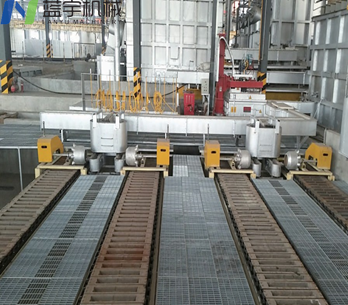
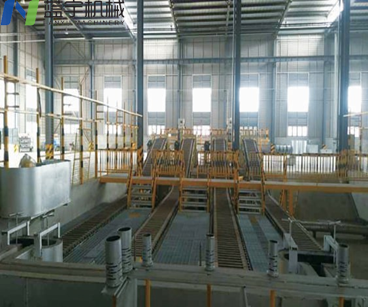
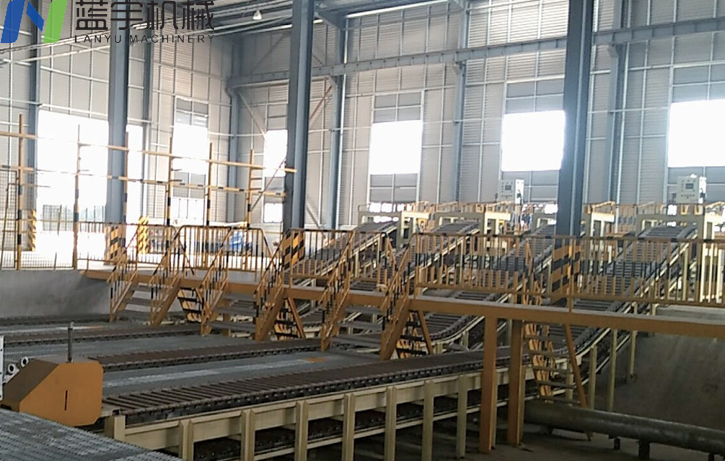
The line combines pouring, mold conveying, cooling, demolding and discharge. Line length, mold arrangement and cooling method are configured for the alloy, ingot size and required output.


Share :